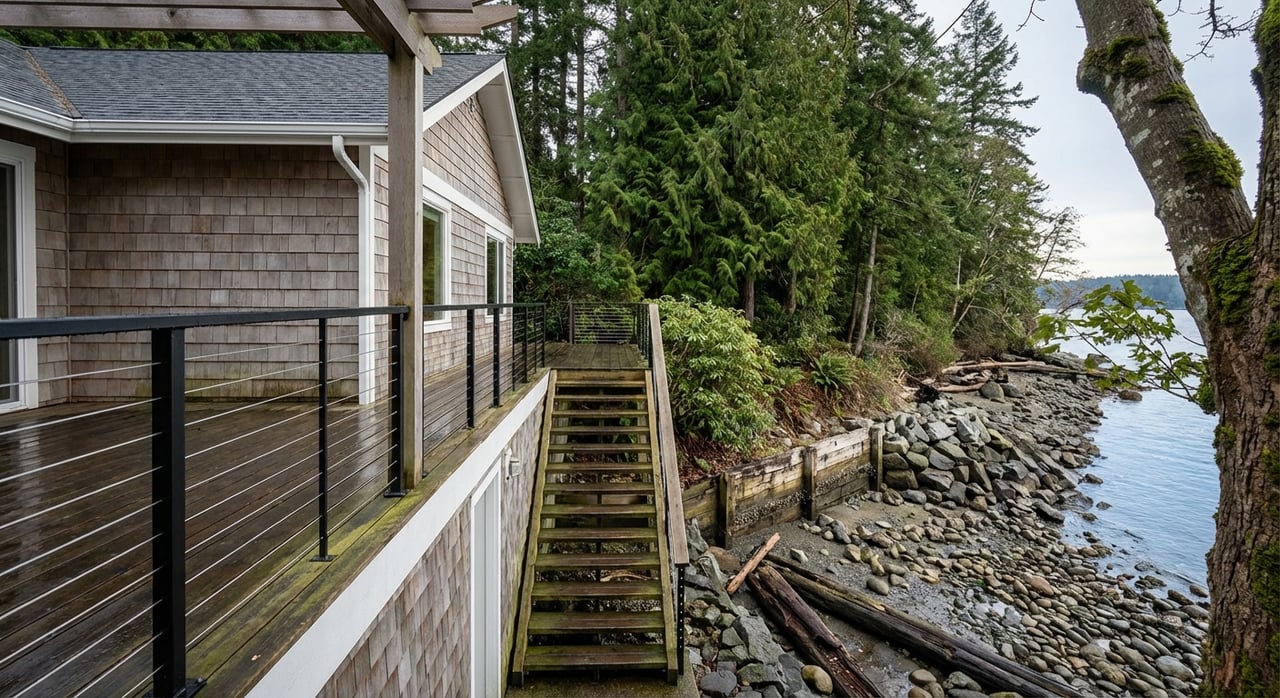
Trying to choose between a true waterfront home and a high‑bank view property in Gig Harbor? It is a big decision that touches your daily routine, budget, maintenance, and even your insurance. You want the romance of the water without surprises later. In this guide, you will learn the real differences, costs, rules, and risks that matter in Gig Harbor and greater Pierce County, plus a simple checklist you can use before you make an offer. Let’s dive in.
Waterfront vs view: clear definitions
Waterfront in this article means a property that reaches the shoreline with direct physical access to the water, such as a beach, stairs, bulkhead, or dock. In the City of Gig Harbor, any activity within shoreline jurisdiction is regulated by the City’s Shoreline Master Program, or SMP. If you are buying true waterfront, you should understand the SMP basics and how permits work for docks, seawalls, and access structures. You can review the City’s program on the official Shoreline Planning page for context and contacts: City of Gig Harbor Shoreline Master Program.
High‑bank or view homes typically sit upland on bluffs or slopes with panoramic views of the water, bridges, and mountains but do not always include deeded beach access or a private dock. These lots may fall outside shoreline jurisdiction but can still be subject to critical‑area and steep‑slope rules. The City’s critical‑area guidance explains how bluff stability and shoreline stabilization are treated differently from low‑lying waterfront: Gig Harbor critical areas and steep slopes overview.
How pricing compares in Gig Harbor
Prices change quickly, and exact premiums vary by neighborhood, lot type, access, and views. Recent public listing snapshots show a rough pattern you can use as a starting point:
- Active waterfront listings in Gig Harbor have shown a median near about 967,000 dollars in recent snapshots.
- Citywide median listing prices have hovered around the high 700,000s in recent snapshots.
- Some upland view neighborhoods, such as areas around Peacock Hill or Soundview, have shown medians in the 1.1 to 1.2 million dollar range.
The takeaway is simple: do not assume waterfront always costs more. Low‑bank access, private moorage, unobstructed views, lot size, privacy, and home condition all move the needle. Use current neighborhood comps and an updated MLS report before you set expectations.
Lifestyle tradeoffs that matter
Waterfront: what you gain
- Direct beach, kayak, swimming, or moorage access from your own property.
- A boating‑forward lifestyle with maximum convenience if you have a permitted dock or lift.
- Lower floors that capture water activity and wildlife up close.
Waterfront: what to plan for
- More attention to shoreline structures. Seawalls, stairs, and docks need inspections and, at times, permits for repairs.
- Seasonality. Tides and depth can limit boat use or beach enjoyment at certain times.
- Evolving flood and sea‑level considerations if parts of the site are low lying.
High‑bank view: what you gain
- Big, sweeping views with fewer shoreline permits to manage day to day.
- Often easier driveway access and guest parking compared with some tight waterfront lots.
- Lower routine shoreline maintenance. Many buyers prefer views without marine chores.
High‑bank view: what to plan for
- Limited private water access. Some homes have long stair runs to the beach or none at all.
- Potential bluff or slope stability questions on feeder bluffs that trigger critical‑area review.
If you want boat access without owning a dock, remember you have options. Local marinas and public facilities, including Gig Harbor Marina, Arabella’s Landing, Jerisich Dock, and public launches, provide alternatives for non‑waterfront owners. See a helpful directory of marinas and launches on the Gig Harbor Visitors Guide.
Permits, rules, and who regulates what
Waterfront work in Gig Harbor is regulated by the City’s SMP, last updated in early 2022. Most shoreline modifications, like docks, bulkheads, or beach access structures, require permits or documented exemptions. In‑water work often also needs state and federal authorizations. Start here for local rules and contacts: City of Gig Harbor Shoreline Planning.
Key points to keep in mind:
- Ask the seller for permit numbers and documentation for docks, seawalls, stairs, or shoreline stabilization. Verify them with the City.
- High‑bank or bluff properties may fall under steep‑slope and landslide‑hazard rules. Review the City’s guidance on critical areas and slope hazards: Steep slopes and stabilization overview.
- In some Pierce County marine areas outside the City, county updates have proposed limiting or prohibiting new residential docks. Confirm current county rules and mapping as part of your diligence. A recent county communication outlines the discussion: Pierce County shoreline rules update notice.
Flood zones, insurance, and long‑term risk
If any structure lies in a FEMA Special Flood Hazard Area, most lenders will require flood insurance. Always check the FEMA Flood Map Service Center for your specific address and confirm the flood zone. You can start with FEMA’s guidance on using the mapping tools here: FEMA Flood Map Service Center help.
Flood insurance pricing has changed under FEMA’s Risk Rating 2.0. Premiums now reflect features of the individual structure, mitigation, and replacement cost, so two waterfront homes in the same zone can have very different premiums. Ask an insurance agent for sample quotes early. Learn more about Risk Rating 2.0 in FEMA’s overview: NFIP Risk Rating 2.0 update.
For long‑term planning, Pierce County references NOAA sea‑level scenarios in its resilience work. While projections extend far into the future, it is smart to consider sea‑level rise and evolving flood mapping for low‑lying waterfront parcels. Review county context and planning considerations here: Pierce County Climate Change Resilience.
Maintenance and typical costs
Every site is different, so always get local contractor and engineering opinions. For early budgeting, these ranges can help you frame the conversation:
- Bulkhead or seawall removal and replacement. A regional guide that many agencies reference shows removal costs roughly in the 30 to 125 dollars per linear foot range depending on material and site access. New or hardened structures often cost much more and require engineering, mitigation, and permits. See the summary context in the Green Shorelines guide: bulkhead and shoreline alternatives overview.
- Retaining and revetment‑type work. Consumer home‑improvement guides place many retaining wall scenarios in the low hundreds to several hundred dollars per linear foot, with large swings based on engineering, materials, and access. Use ranges only for rough planning, then get local bids. For a cost explainer, see this example guide on wall costs: retaining wall cost context.
- Salt‑air and corrosion. Marine environments can accelerate corrosion on metals and shorten the life of exterior finishes and outdoor mechanicals. Plan for more frequent fastener, deck, and exterior maintenance near the water. For technical background on durability in marine conditions, see this engineering overview: durability of materials in marine exposure.
Appraisal, lending, and resale
Waterfront properties often have fewer direct comparable sales, and improvements like docks or seawalls add complexity. Appraisers typically ask for permits, surveys, invoices, and elevation certificates to support their analysis. Expect a more narrative appraisal and, at times, a second valuation request from the lender. For background on how appraisers handle unique properties, see this professional resource: Appraisal of Real Estate overview.
Lenders and title companies routinely flag unpermitted shoreline work because it can create compliance or encroachment issues. Title insurance protects against covered title defects, but it does not fix physical noncompliance. Build permit‑history contingencies into your offer, and be ready to request seller documents or escrows where needed.
Buyer checklist: verify these before you offer
Use this quick list to reduce surprises and protect your budget:
Access and rights
- Confirm whether the property includes private, deeded shore access or only a view. Check title, plat, and recorded easements.
- If there is a dock or slip, verify that it is permitted and recorded, and whether it is private, leased, or shared. Ask for permit numbers and any maintenance or HOA agreements.
Permits and compliance
- Request permits and approvals for the dock, seawall, stairs, and any beach‑nourishment work. Verify with the City’s SMP resources: Gig Harbor Shoreline Planning.
- Ask whether shoreline stabilization ever required Army Corps, state, or other federal authorizations, and request the file if so. For context on multi‑agency permitting, see this federal archive summary: multi‑agency shoreline permitting background.
Hazards and insurability
- Look up the FEMA flood zone for the structure and order an elevation certificate if needed. Start with FEMA’s mapping help: FEMA Flood Map Service Center.
- Obtain sample flood insurance quotes under Risk Rating 2.0 and compare NFIP and private options where available: Risk Rating 2.0 overview.
Condition and costs
- Order a marine‑structure inspection for docks and seawalls and ask for a 10‑year maintenance reserve estimate. For high‑bank sites, engage a local geotechnical engineer.
- Request any geotechnical studies, slide history, and maintenance records. Review the City’s steep‑slope guidance: critical areas and slopes.
Neighborhood and market fit
- Ask yourself which matters more to your household and likely future buyers: private dock access or lower maintenance with broad curb appeal. Then compare live neighborhood comps with your agent to test resale assumptions.
Which home fits your life?
- Active boater. Focus on low‑bank waterfront with permitted private moorage, easy launch access, current permits, and a clear maintenance plan. Expect more shoreline upkeep and an in‑depth insurance conversation.
- View‑first, low‑maintenance. Consider high‑bank/view homes and pair them with a slip at a local marina for boating access. You get the panorama and reduce shoreline chores.
- Resale‑minded buyer or investor. Compare today’s waterfront listing premiums against view‑area medians, then weigh maintenance and permitting risk against demand for private access. Document everything to preserve buyer confidence at resale.
Ready to compare properties?
You deserve clear answers and a plan that fits your budget and lifestyle. If you are weighing Gig Harbor waterfront vs a view home anywhere in the Tacoma‑Lakewood and Pierce County area, let a local advisor walk you through permits, flood zones, comparables, and maintenance planning. Reach out to Greg Pubols for a friendly, no‑pressure review of your options and a step‑by‑step path to a confident offer.
FAQs
What is the difference between waterfront and high‑bank view in Gig Harbor?
- Waterfront includes land to the shoreline with direct access, which brings SMP permit rules into play. High‑bank view homes sit upland with panoramic views and may face steep‑slope rules but not shoreline permits.
How do I check if a Gig Harbor property is in a flood zone?
- Use the FEMA Flood Map Service Center to look up the address, then confirm the zone and order an elevation certificate if needed: FEMA mapping help.
Do docks and seawalls in Gig Harbor need permits?
- Most shoreline modifications require permits or exemptions under the City’s SMP, and some work needs state or federal authorizations. Verify permit history with the City: Shoreline Planning.
What maintenance costs should I expect on a waterfront home?
- Plan for inspection and periodic work on docks and seawalls. Regional guidance shows bulkhead removal around 30 to 125 dollars per linear foot, with new structures costing more and needing engineering: Green Shorelines guide.
How does flood insurance pricing work for waterfront homes?
- Under FEMA’s Risk Rating 2.0, premiums reflect the property’s specific risk and replacement cost. Two homes on the same shoreline can have different rates. Get sample quotes early: Risk Rating 2.0 update.
Where can I keep a boat if I buy a view home without a dock?
- Consider local marinas and public docks in Gig Harbor, such as Gig Harbor Marina, Arabella’s Landing, and Jerisich Dock. See locations here: marinas and launch directory.