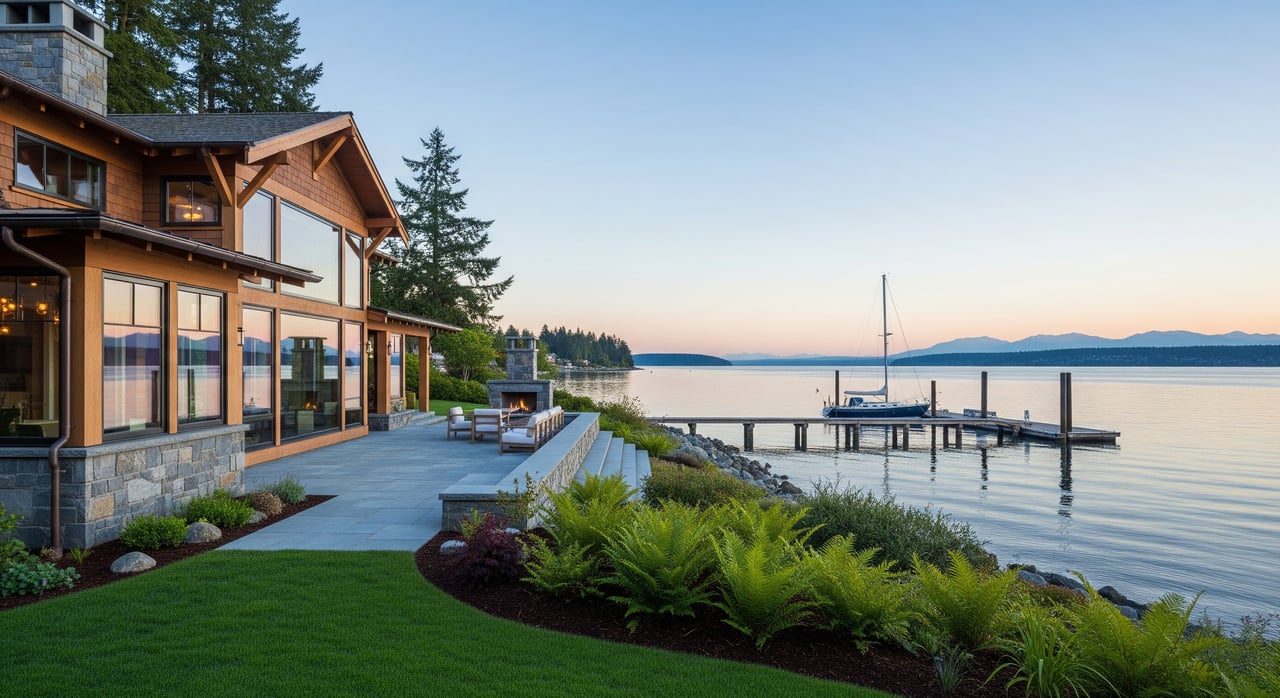
Eyeing a waterfront home in Steilacoom or a view property around Tacoma–Lakewood and hearing the term “jumbo loan”? You are not alone. Higher price points in parts of Pierce County can push your loan amount above standard limits, which changes how lenders review your file. In this guide, you will learn what counts as a jumbo in 2024, when you are likely to need one locally, and how to prepare so your offer and closing stay on track. Let’s dive in.
What is a jumbo loan
A jumbo loan is any mortgage where the loan amount exceeds your county’s conforming limit. Conforming loans meet Fannie Mae and Freddie Mac rules. Jumbo loans do not, so private investors or portfolio lenders set the guidelines.
For 2024, the baseline conforming limit for a 1‑unit home is $766,550. Limits update each year and vary by unit count. Most of Pierce County follows the baseline number.
What matters is your loan amount, not the purchase price. Loan amount equals purchase price minus down payment, plus any financed costs. Example: a $1,000,000 purchase with 20% down creates an $800,000 loan, which is over $766,550, so it is jumbo.
When jumbos come up locally
In Pierce County, certain areas often cross the threshold. Steilacoom waterfront parcels, Tacoma’s Point Ruston and Ruston Way, parts of Browns Point, and some Gig Harbor–adjacent properties feature lot premiums, views, and custom features that can raise prices.
A simple rule of thumb: once the price tops about $800,000, your loan amount may land near or above the 2024 conforming limit unless you make a larger down payment. Consider these examples:
- $900,000 price with 10% down ($90,000) → $810,000 loan → jumbo.
- $900,000 price with 20% down ($180,000) → $720,000 loan → conforming.
- $1,200,000 price with 25% down ($300,000) → $900,000 loan → jumbo.
Whether you need a jumbo depends on your loan amount after down payment. Run the math early during pre‑approval so you can plan your financing and offer strategy.
Underwriting: what to expect
Jumbo programs vary by lender. In general, expect stronger credit standards and more documentation than conforming loans.
Credit scores
Many lenders price best for scores around 700 to 760 or higher. Lower scores may still qualify, but pricing and terms can change.
Down payment and LTV
Typical minimum down payments range from 10% to 20%. Lower down options may exist with tighter rules, higher rates, or additional conditions.
Reserves and DTI
Expect lenders to ask for 6 to 12 months of reserves for many jumbo scenarios. Some higher‑balance or investment loans can require 12 to 24 months. Debt‑to‑income ratios often need to be at or under the mid‑40% range, though strong assets and lower LTV can help.
Income and assets
Provide standard income verification such as W‑2s, pay stubs, and tax returns. Self‑employed buyers should plan for two years of returns. Be ready to document large deposits, transfers, and the source of funds. Many lenders count a portion of retirement assets toward reserves.
Appraisals for unique homes
Waterfront and custom homes can have limited comparable sales, which can extend timelines. Your lender may require a full interior and exterior appraisal, and sometimes a second or specialty appraisal for higher‑value properties. Build a little extra time into your contract if the property is unique.
Mortgage insurance and structure
Private mortgage insurance generally does not cover loans above the conforming limit. If you want a lower down payment, some lenders use a second lien, lender‑paid coverage, or other portfolio structures. Ask your lender how they handle high‑LTV jumbos.
Rates and costs: how jumbos price
Historically, jumbo rates often ran higher than conforming because of how these loans trade. In some market periods, investor demand makes jumbo rates competitive or even slightly better. Pricing shifts with market conditions.
Here is how to approach it:
- Compare quotes from several sources, including community banks, credit unions, national banks, and mortgage brokers.
- Your rate depends on loan size, credit score, LTV, and how the lender structures and sells the loan.
- Ask about discount points and breakeven timelines if you plan to buy down the rate.
- Discuss lock lengths and float‑down options if you expect rate volatility during your escrow.
Buyer prep checklist
Set yourself up for a smoother approval and appraisal.
- Calculate your expected loan amount early: price minus down payment.
- Gather documents: W‑2s, pay stubs, 2 years of tax returns if self‑employed, and 2–3 months of bank and investment statements.
- Prepare gift letters and explanations for large deposits or transfers.
- Review potential appraisal challenges for waterfront or custom homes and allow extra time.
- Verify reserve requirements for your scenario, often 6–12 months.
- Confirm appraisal requirements for your property type.
- Collect multiple lender quotes and compare total costs, not just rate.
Smart questions to ask lenders
Use these to compare programs and timelines.
- Do you offer jumbo products, and what are the minimum credit score, down payment, and reserves for my loan size?
- What maximum DTI do you allow, and can stronger reserves or a larger down payment change that?
- How do you verify assets, and what are your rules for sourcing and seasoning large transfers?
- Will you require a second appraisal for a waterfront or unique property?
- Do you sell your jumbo loans or keep them in portfolio?
- Is mortgage insurance available for this loan, or would you use a second lien for lower down payments?
- What are your lock terms, float‑down options, and average underwriting timelines for jumbos?
Local examples
Here are two typical buyer paths to show how details can change your loan type and paperwork.
- Buyer A: $950,000 Steilacoom waterfront home with 15% down created a $807,500 loan, which was jumbo. The lender asked for 12 months of reserves and a second appraisal. Careful prep kept closing on track.
- Buyer B: $900,000 Tacoma view home with 20% down created a $720,000 loan, which stayed conforming. The buyer compared two jumbo quotes anyway to confirm best execution.
Next steps in Pierce County
If you are considering waterfront or custom homes in Steilacoom, Tacoma–Lakewood, or nearby areas, start by estimating your expected loan amount and lining up documents. Then speak with lenders that actively do jumbos so you can compare terms and timelines. If you want local guidance and introductions to jumbo‑experienced lenders, reach out to Greg Pubols for a brief, no‑pressure consultation.
FAQs
What is the 2024 conforming loan limit in Pierce County?
- The baseline 1‑unit limit is $766,550 for 2024, and most of Pierce County uses that number.
How do I know if my loan is jumbo?
- Compare your expected loan amount to the county conforming limit; if your loan exceeds the limit, it is jumbo.
Does the purchase price or loan amount determine jumbo status?
- Jumbo status is based on the loan amount after your down payment, not the purchase price.
Do jumbo loans require more cash reserves?
- Many jumbo programs ask for 6–12 months of reserves, with higher‑balance or investment scenarios sometimes requiring more.
Are jumbo rates always higher than conforming?
- Not always; pricing shifts with market conditions, loan size, credit, LTV, and the lender’s program.
Will waterfront or custom homes need extra appraisal steps?
- Often yes; unique properties can require more appraisal scrutiny and sometimes a second or specialty appraisal.